
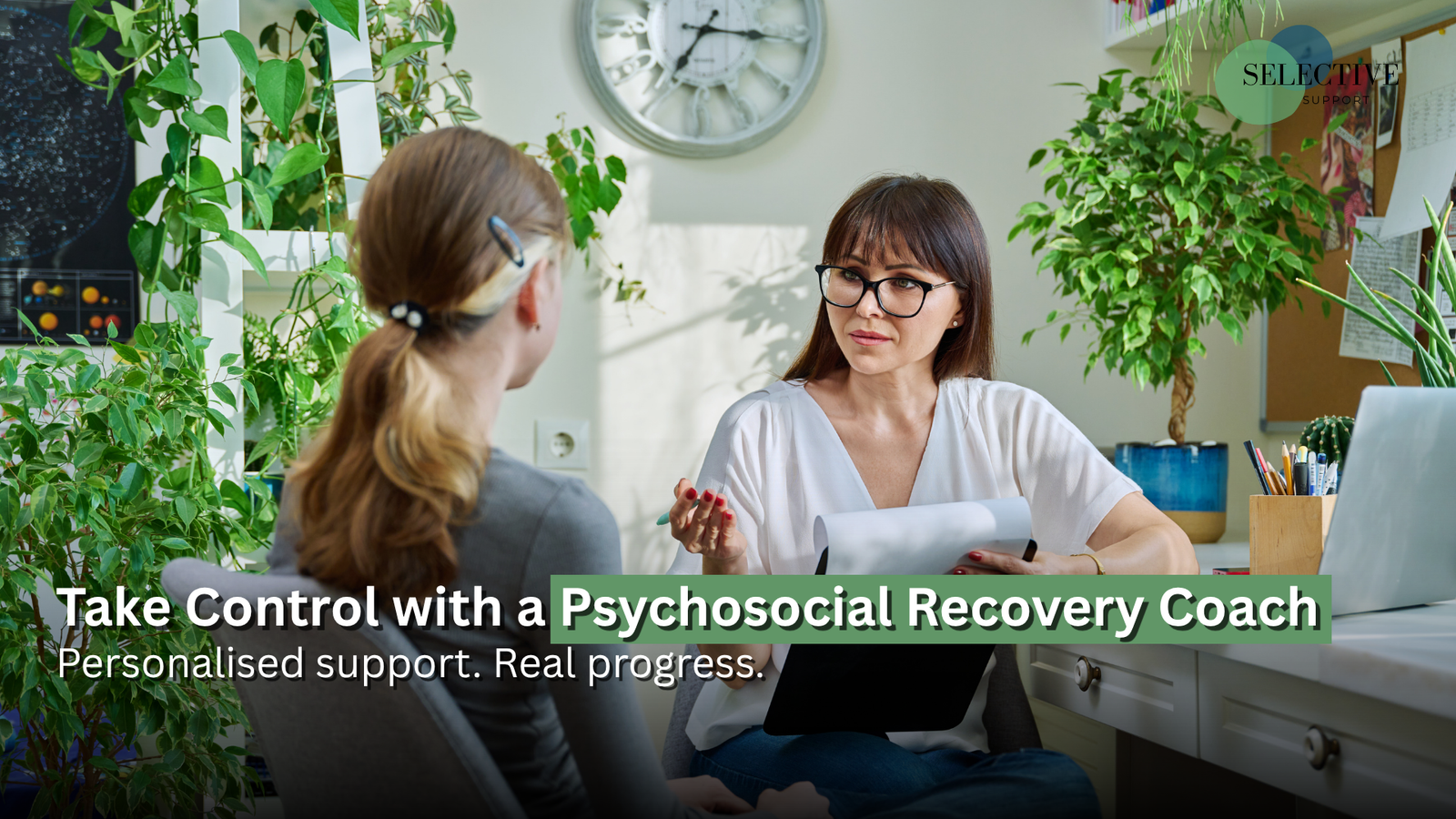
What is a psychosocial recovery coach?
A psychosocial recovery coach works alongside a person with psychosocial disability on their goals, their routines and the services around them. The NDIS page What is a recovery coach puts it this way: "A recovery coach is an NDIS-funded worker. They help participants with psychosocial disability in their recovery journey." The role suits NDIS participants in Melbourne who are making the call themselves, the family members who hold a plan with them and the coordinators who refer them.
If the term itself is new, the guide to psychosocial disability explains it first.
What does a psychosocial recovery coach do?
A psychosocial recovery coach helps you work on your goals and links you with the services you need, in and beyond the NDIS. The NDIS page What is a recovery coach says a recovery coach can help you "build capacity and resilience" and "find, plan and organise supports".
The connections reach past the scheme itself. The same NDIS page adds: "Recovery coaches can also help connect you with community and mainstream services. This includes health and mental health services outside the NDIS."
In a coaching relationship, that work can look like this:
- choosing one or two goals from your plan to start with
- building a weekly routine around appointments and daily tasks
- finding a service you need and making the first contact together
- checking in on what is working, and changing the plan when something stops working.
Day to day, the work is practical. Build routines that hold, work through the hard days, and move on the goals that matter to you. Questions about diagnosis or clinical care belong with your GP or treating team.
Who is a psychosocial recovery coach for?
A psychosocial recovery coach is for a person with psychosocial support needs who wants steady help putting their goals into practice. Some people come with a single goal, such as getting back into a daily routine. Others want someone alongside them through a few months of change, such as a move, a new job or a return to study.
Sometimes a family member makes the first call. If you support someone with their plan, agree with the coach at the start how you will stay involved.
What is psychosocial recovery coaching like?
Psychosocial recovery coaching is practical work with a coach on the goals you choose. A session might cover a weekly routine, an appointment you have been putting off or a form for a new service. Your coach also keeps an eye on how the pieces fit together. The NDIS page What is a recovery coach describes that part of the role: "They can help make sure all services work well together and stay connected."
You set the direction. Bring the goals that matter to you, and say which one to start with.
How to prepare for your first meeting with a recovery coach
A little preparation makes the first meeting about you, with less time spent on paperwork. Bring or decide these before you meet:
- Your plan. Have your current NDIS plan to hand, so you and the coach can read the goals together.
- The services you use now. List each one, with a name or number to contact.
- Where to start. Pick the one goal that matters most to you this month.
- Who else is involved. Decide whether a family member or another worker should join, and say so at the start.
- What has helped before. Note what worked with past supports, and what did not.
Ask the coach how they keep in touch between meetings and how quickly they usually reply. A clear answer to both is a good sign.
Does the NDIS fund a recovery coach?
The NDIS answers this on its page What is a recovery coach: "You’ll generally receive funding for a recovery coach if you have psychosocial support needs." On hours, the page adds: "The number of hours funded for a recovery coach depends on your needs." It also says: "Your NDIA planner or NDIS partner will help you work out how many hours you need."
That makes your needs and goals the starting point for the conversation with your planner. Whether this sits in your plan depends on your goals and funding. We'll help you check.
For support coordinators and plan managers
Note the plan goals the coaching connects to at referral, and the services already in place. The coach then starts from what exists. Agree early how progress against each goal will be reviewed, and who receives that update. It keeps the coaching tied to the goals in the plan. Where a case reaches across health, housing, justice or education at once, read how specialist support coordination works as well.
Frequently asked questions
What should I look for in an NDIS recovery coach?
Look for a coach you can work with over time, and ask about lived experience. The NDIS page "What is a recovery coach" says: "You might find it helpful to choose a recovery coach with lived experience." Before you start, ask who you will work with each week, and whether that person stays the same.
How do I find a psychosocial recovery coach in Melbourne?
Start with the people already around your plan. The NDIS page "What is a recovery coach" says: "Your support coordinator or my NDIS contact can help find you a recovery coach." If you already have a support coordinator, ask them first, and tell them what you want the coaching to help with. Then meet one or two coaches who work in your part of Melbourne, and take the preparation list above to each first conversation.
How is a recovery coach different from a support coordinator?
A recovery coach does work similar to a support coordinator's, with a focus on psychosocial disability. The NDIS "Guide to working as a support coordinator" says: "A psychosocial recovery coach (or recovery coach) helps a participant in the same way you do as a support coordinator, but they specifically support people with their psychosocial disability." For the general role, read what an NDIS support coordinator does.
Next steps with Selective Support
We offer personalised recovery coaching for NDIS participants with psychosocial disability. You are the expert in your own life. Our job is to listen first.
Our coaching works in three ways:
- Moving at your pace
- A space to talk without being judged.
- Help to navigate mental health services and NDIS systems
One coach stays with you. If another provider fell short, tell us what was missing. We pick up where other providers left off. Selective Support is a registered NDIS provider.
Read more about psychosocial recovery coaching with Selective Support, or book your free chat.