NDIS social and community participation: what it is and how to plan for it
NDIS social and community participation is support to take part in the social and community life you want, built around the goals in your plan. It covers time with other people, activities in your local area and the skills that make getting there easier. This guide is for NDIS participants and families in Melbourne, and for the coordinators and plan managers who help them choose.
The NDIS page What are NDIS supports describes what its supports are for in one line: "NDIS supports help you have the same things in life as people without disability and help you work towards your goals." Social and community participation is that idea applied to the parts of life outside home.
What is NDIS social and community participation?
NDIS social and community participation means taking part in activities with other people and in your community, with support where you need it. The support might be a worker beside you at an activity, a regular group, or time learning a skill in a new place. What makes it yours is the goal behind it: the activity should connect to something you want in your life.
You will see the idea written several ways. People search for it as "assistance with social and community participation", "increased social and community participation", "NDIS community access" and "NDIS group activities". The words differ, and the question underneath stays the same: what do you want to be doing, and what help would make it happen?
Assistance with social and community participation: what it can look like
In plain terms, assistance with social and community participation is hands-on help to get to an activity and take part in it. The activity is chosen by you, around your interests and goals. Common examples include:
- a regular group activity, such as cooking, art, sport or a social group
- outings in your local area, like the library, a market or a community event
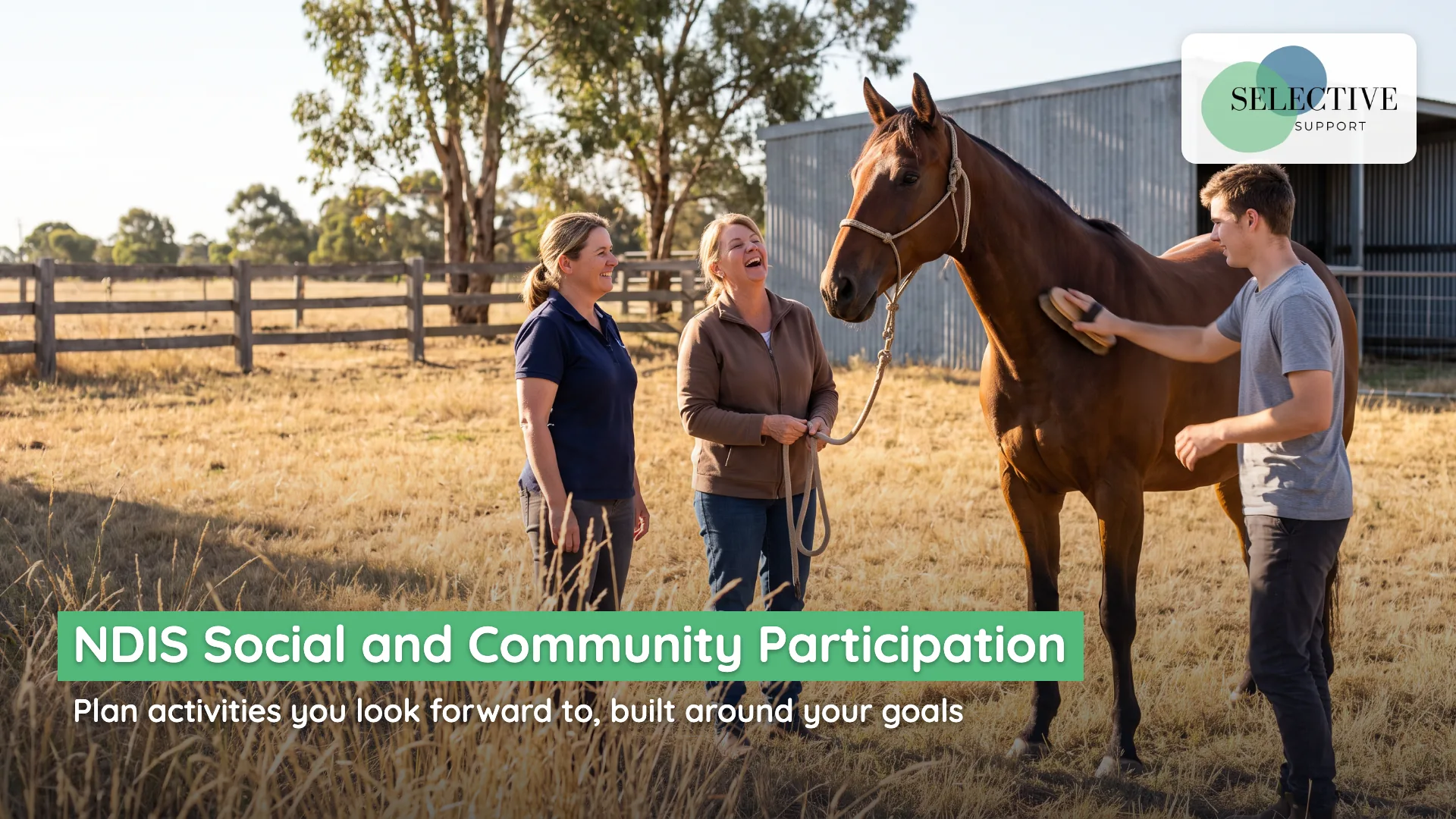
- time outdoors, such as gardening, walking groups or a farm day with animals
- learning a practical skill alongside other people
- practising getting to and from an activity with more confidence.
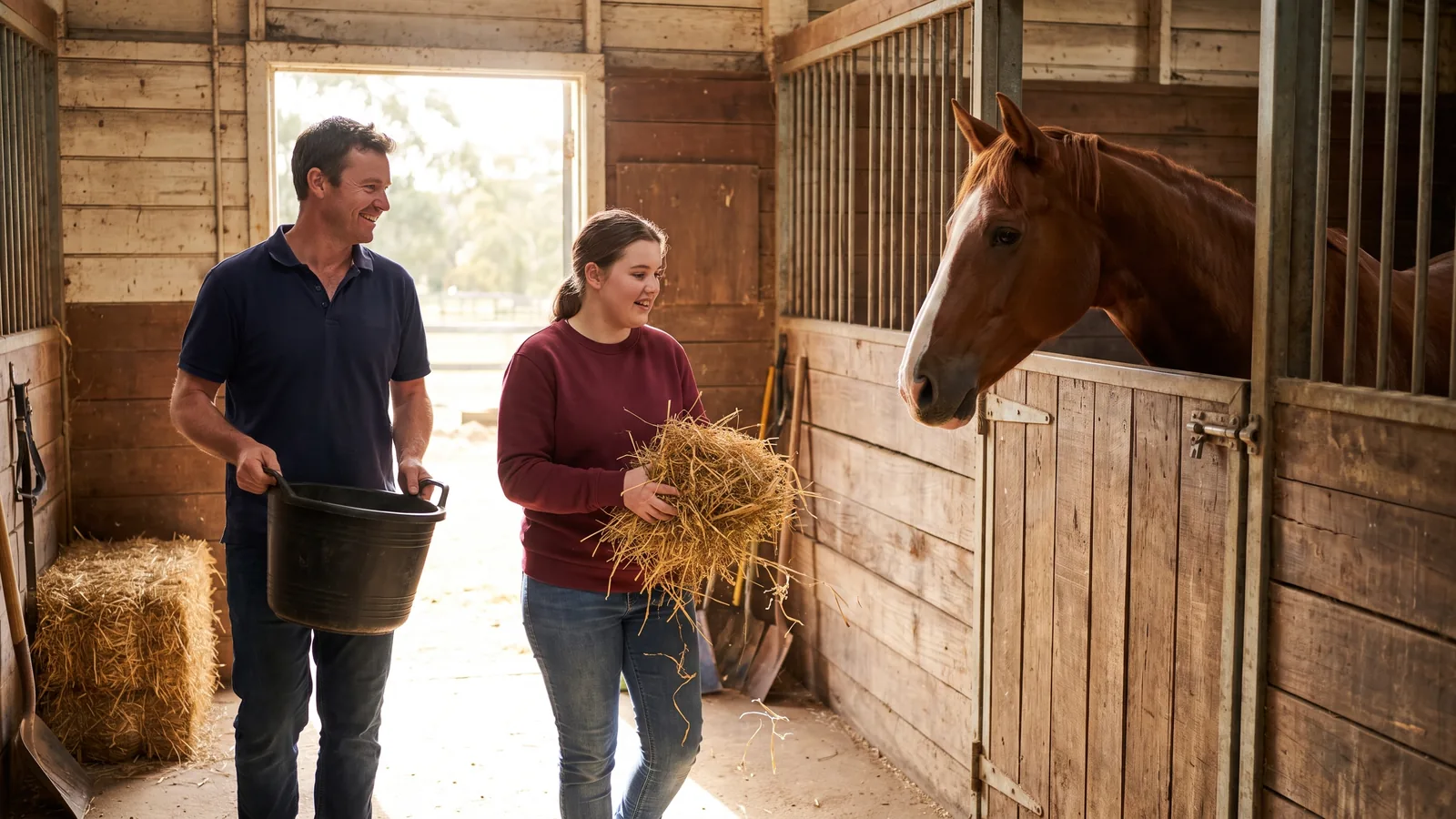
A good activity is one you look forward to. If you dread it, or it has little to do with your goals, it is worth raising with whoever helps you plan.
Increased social and community participation: setting the goal
Increased social and community participation starts with a goal in your own words. A clear goal gives your planner, your coordinator and any provider something concrete to work towards. Before a planning meeting, try answering these:
- What do you want to be doing? Name the activity or the kind of place: outdoors, with animals, in a group, one to one.
- How often? Once a week, once a fortnight, a full day or a short session.
- What gets in the way now? Transport, confidence, a busy or noisy place, or finding something that suits you.
- What would help? A worker beside you, a smaller group, a quieter setting, or time to settle in.
- How will you know it's working? Something you could point to in six months, in your own words.
Write the answers down and take them with you. They turn a broad heading in a plan into a week you can picture.
NDIS community access and group activities: how to compare providers
NDIS community access and group activities are two common ways providers describe this support, and the label tells you less than the detail. Before you choose, ask each provider the same questions:
- What happens during a session, from arrival to finish?
- How long is a session, and which days does it run?
- Is it a group, one to one, or both?
- Who will be with the participant on the day?
- How do they get there, and is transport part of it?
- How does the activity link to the goals in the plan?
- Will they tell you honestly whether it looks like a good fit?
Clear answers to these let you compare like with like. A provider who can describe a typical day in detail gives you something to check.
Social and community participation and your plan
The NDIS sets out what plan funding can be used for. Its page What are NDIS supports says you can only use the funding in your plan for items that are "NDIS supports", "related to your disability" and "in-line with your plan."
That makes your own plan, and the goals written in it, the starting point for any activity you are considering. Whether this sits in your plan depends on your goals and funding. We'll help you check.
If parts of your plan are unclear, the same NDIS page suggests a next step: "You can ask your my NDIS contact for a plan implementation meeting." A support coordinator can also help. Read what an NDIS support coordinator does.
For support coordinators and plan managers
Match the activity to a named plan goal at referral, and record which goal each session works towards. Ask the provider for a description of a typical session, the session length, the format and who leads it, so the participant and family can picture the day before they agree to it. Where a participant's goals point towards time outdoors or with animals, a farm-based option in Melbourne's north-west may be worth raising in the first conversation.
Frequently asked questions
What are examples of increased social and community participation goals?
A goal names what you want to be doing and where. Examples people work towards include joining a regular group, spending time outdoors each week, learning a practical skill alongside others, or getting to a local activity with more confidence. Write the goal in your own words, then ask your planner or support coordinator how it can be reflected in your plan.
Does NDIS pay for group activities?
The NDIS page "What are NDIS supports" says you can only use the funding in your plan for items that are "NDIS supports", "related to your disability" and "in-line with your plan." So the answer depends on your own plan. Whether this sits in your plan depends on your goals and funding. We'll help you check.
What is NDIS community access?
NDIS community access is a phrase people use for support to get out and take part in activities in their community. Many providers use it alongside community participation. Ask any provider what a session involves, who runs it and how it links to your goals, because the label on its own tells you little.
Next steps with Selective Support
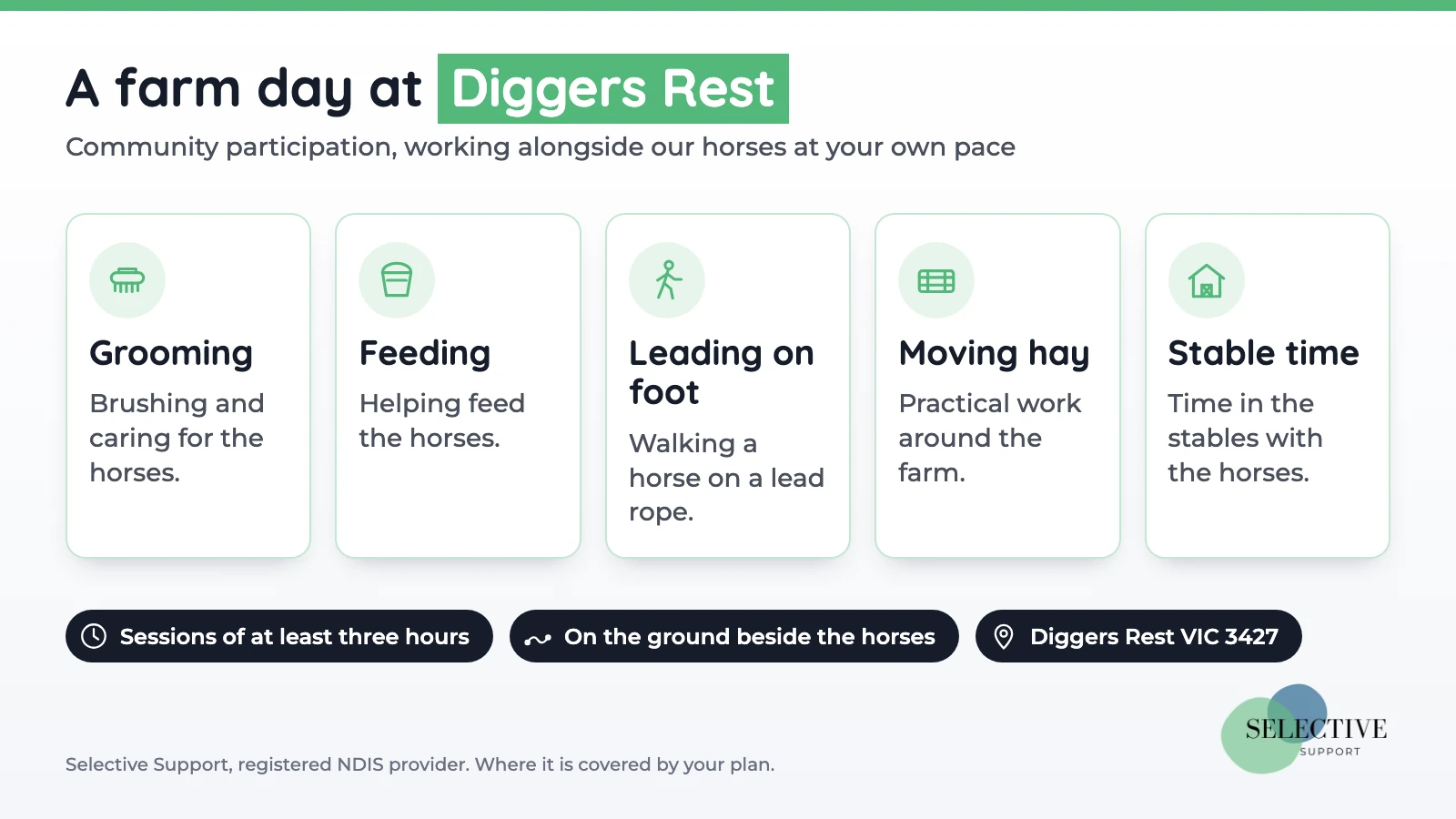
Selective Support is a registered NDIS provider. We offer community participation on our farm at Diggers Rest in Melbourne's north-west, with activities shaped around the goals that matter to you. A farm day can include grooming and feeding the horses, leading a horse on foot, moving hay and time in the stables, and each session runs for a minimum of three hours. You'll work alongside our horses at your own pace in a calm, supportive environment.
Amber, who runs the Diggers Rest farm, and our team will speak honestly with you about whether our service appears to be a helpful and appropriate fit.
Read more about NDIS community participation at Diggers Rest, or book your free chat.