Equine Therapy vs Therapeutic Horse Riding: What the NDIS Funds
You may be comparing two horse-based services that look similar on the surface.
Both involve spending time with horses. Both may feel calming, confidence-building and enjoyable. Both may even use words such as “therapy”, “therapeutic” or “developmental”.
However, the NDIS treats equine-assisted therapy and therapeutic horse riding very differently.
The key difference is not whether the participant benefits from being around horses. It is whether the service is a structured, evidence-based therapy delivered by a qualified professional or a recreational, sporting or social activity.
Current NDIS guidance identifies riding a horse as an example of an animal activity that is not animal-assisted therapy when it is not goal-centred or part of an evidence-based treatment plan. The ordinary cost of that activity cannot be paid from NDIS funding.
Understanding this distinction can protect your plan funds and help you ask clearer questions before booking.
What Is Therapeutic Horse Riding?
Therapeutic horse riding generally describes mounted horse activities intended to support enjoyment, confidence, participation or personal development.
A program may include:
- Learning horse-handling skills
- Taking part in mounted activities
- Developing balance or coordination
- Building confidence around horses
- Socialising with other participants
- Following routines and instructions
- Participating in recreation or sport
These experiences can have real value. A participant may enjoy being outdoors, develop a sense of achievement or feel more connected to their community.
However, calling the activity “therapeutic” does not automatically make it an NDIS therapy support.
Under current NDIS guidance, recreational horse-riding sessions are treated as ordinary recreational costs when they are not delivered as goal-directed, evidence-based therapy. The NDIA’s published example explains that a horse-riding program may provide social benefits while still remaining a day-to-day recreational cost that the participant or family would usually pay.
The word therapeutic may describe how the experience feels. It does not, by itself, establish the professional scope, treatment plan or evidence required for NDIS-funded therapy.
For a closer comparison involving community disability programs, read Riding for the Disabled vs NDIS Equine Therapy.
What Are Equine-Assisted Therapy and Equine Assisted Learning?
Equine-assisted therapy is a professional support in which a qualified practitioner includes a horse as one tool within a structured therapy session.
The NDIS describes animal-assisted therapy as an evidence-based treatment planned around the participant’s goals. The animal helps the person engage in the session, while the qualified health professional remains responsible for delivering the therapy.
Depending on the practitioner’s recognised profession and the participant’s needs, goals may involve:
- Emotional regulation
- Communication
- Social interaction
- Problem-solving
- Daily-living skills
- Independence
- Community participation
- Functional movement or coordination
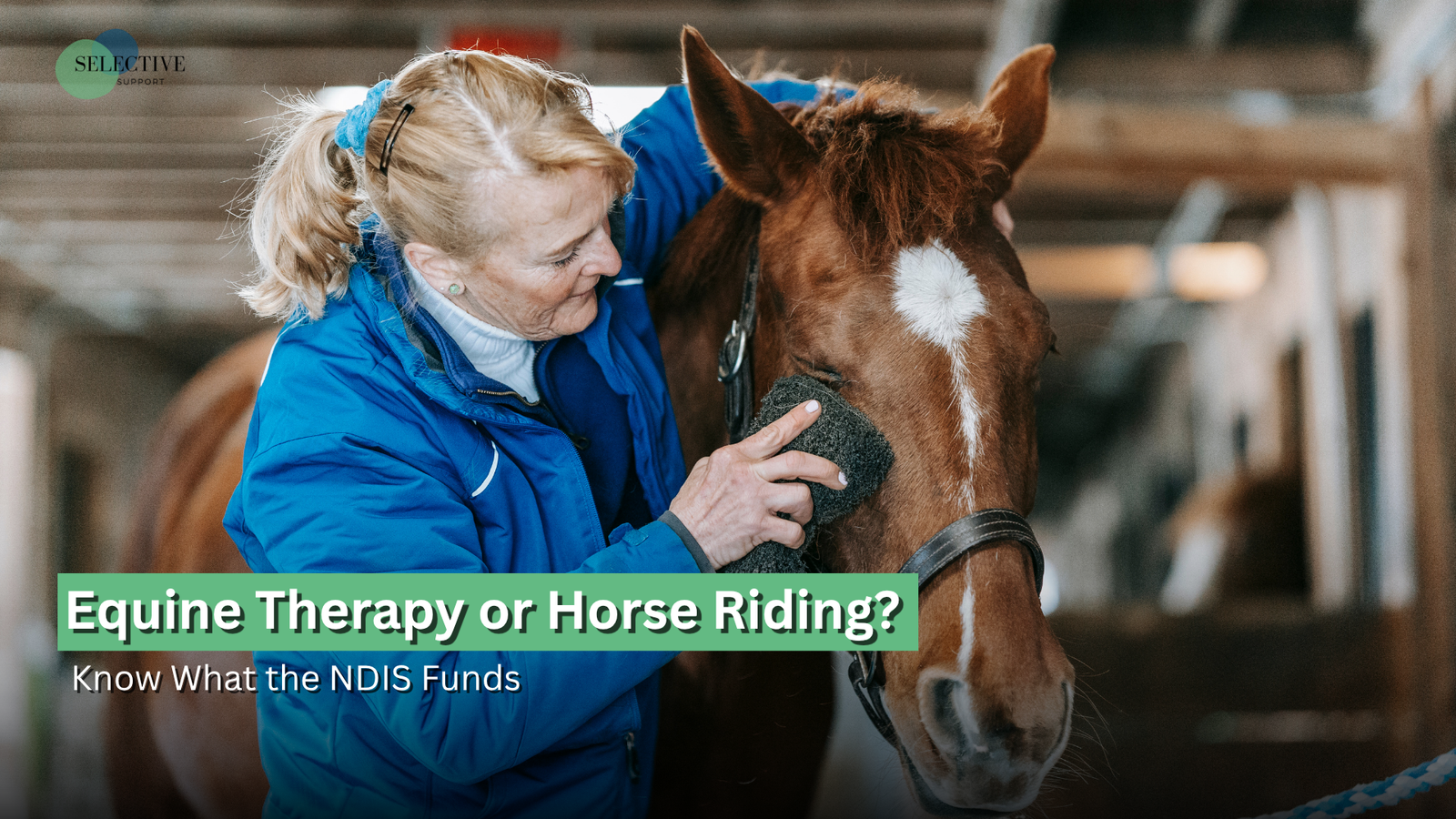
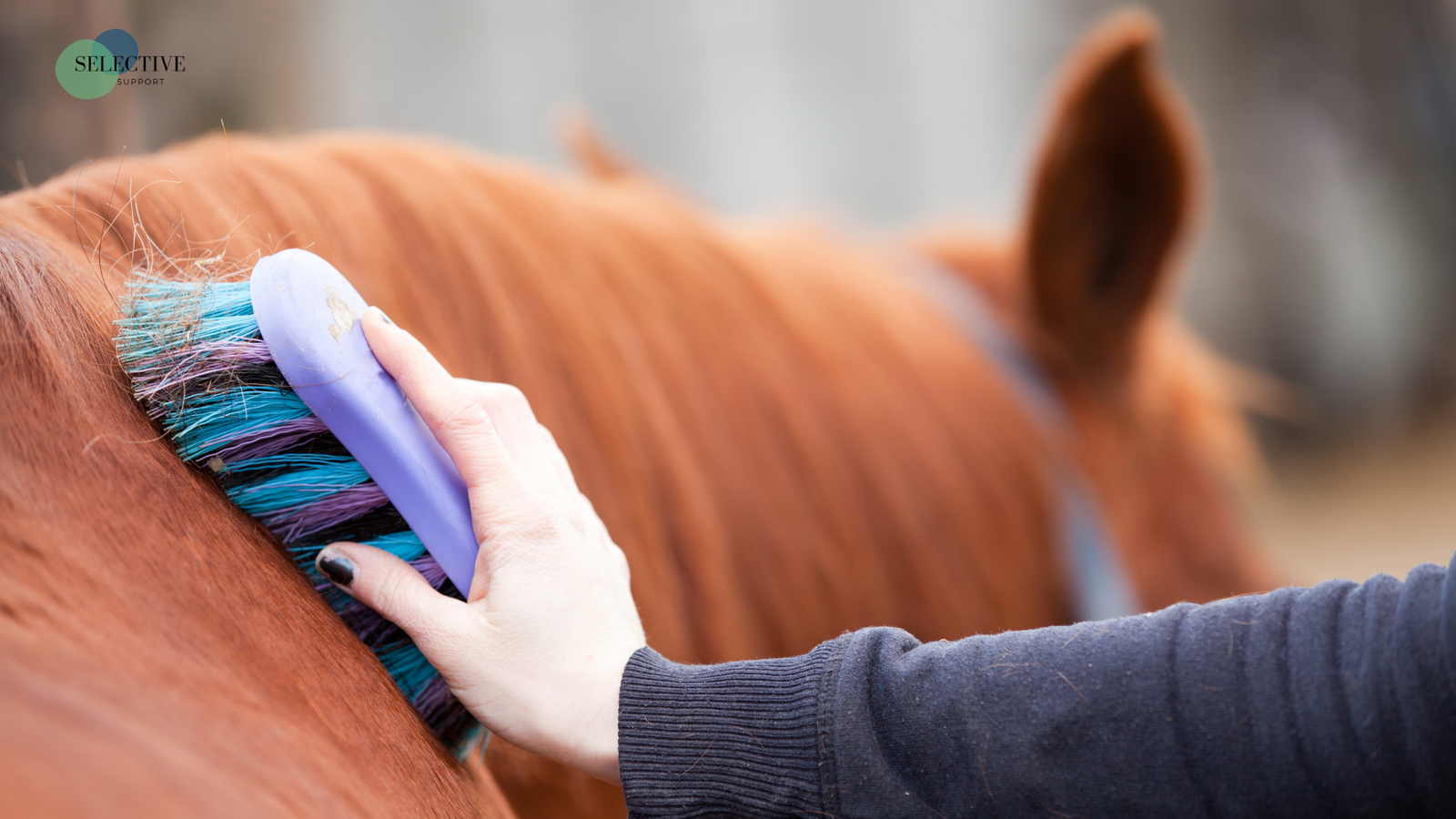
At Selective Support, equine-assisted therapy is ground-based and led by a developmental educator. Activities may include grooming, observing horse behaviour, practising calm communication, completing problem-solving tasks and building routines. Each activity is connected to the participant’s developmental or capacity-building goals. No mounted activities are offered.
Where does equine assisted learning fit?
Equine assisted learning, or EAL, generally focuses on structured skill development rather than clinical treatment.
It may support goals involving:
- Confidence
- Communication
- Teamwork
- Patience
- Decision-making
- Personal responsibility
- Social and emotional skills
EAL is not automatically an NDIS-funded therapy simply because it is structured or delivered around horses. The service must still fit a legitimate disability-related support in the participant’s plan, and the practitioner’s qualifications must match what they are delivering.
The safest approach is to look past the program name and ask what professional service is actually being provided.
Why the NDIS May Fund One but Not the Other
The NDIS looks at the purpose of the support, the qualifications of the practitioner and how the service connects to the participant’s disability-related goals.
Equine-assisted therapy may be funded when it:
Relates to the participant’s disability
Aligns with their NDIS plan and goals
Forms part of an evidence-based treatment or developmental plan
Is delivered by a trained and qualified professional
Has clear functional outcomes
Represents value for money
Meets the relevant NDIS pricing requirements
The main differences between equine-assisted therapy and therapeutic horse riding are the purpose, practitioner, plan and activity.
The purpose
Equine-assisted therapy begins with a specific disability-related goal, such as improving emotional regulation, communication, daily-living skills or independence.
Therapeutic horse riding may focus on recreation, sport, enjoyment or community participation. These benefits can be meaningful, but they do not automatically make the activity an NDIS therapy support.
The practitioner
Equine-assisted therapy must be delivered by a qualified professional whose recognised scope matches the support being provided.
A horse professional may have valuable experience in horse care and safety, but horse-related qualifications alone do not qualify someone to deliver allied health therapy.
The individual plan
A therapy provider should be able to explain:
- The participant’s functional needs
- The NDIS goal being addressed
- Why the approach is suitable
- The expected outcomes
- How progress will be measured
- When the support will be reviewed
A recreational program may offer general benefits without having an individual therapeutic or developmental plan.
The activity
In equine-assisted therapy, the horse is used as one tool within a structured professional service.
A recreational, sporting or social horse activity does not become animal-assisted therapy simply because an allied health professional delivers or attends the session. This distinction is also outlined in the NDIS guidance on animal-assisted therapy.
The NDIS may sometimes fund additional disability support needed to participate in a recreational activity, such as support-worker assistance. However, it does not generally fund the ordinary participation fee or standard activity costs.
Having therapy funding in your plan does not guarantee that every horse-based service can be claimed. The actual support must meet the NDIS funding criteria and suit your individual goals, needs and circumstances.
For a broader explanation of the eligibility rules, read Is Equine Therapy Covered by the NDIS?.
How to Tell Which Service You Are Being Offered
It is reasonable to ask a provider for clear answers before signing a service agreement.
Use these questions:
- Are the sessions ground-based or mounted?
Ask the provider to describe exactly what the participant will do. - What is the practitioner’s primary profession?
Confirm whether they are a developmental educator, psychologist, occupational therapist or another recognised professional. - Are they registered or professionally accredited?
Ask which professional body oversees their practice. - What disability-related goal will the service address?
The answer should connect to your individual plan rather than describe general wellbeing. - Is there an individual therapy or developmental plan?
Ask how the sessions will be planned, documented and reviewed. - How will progress be measured?
A qualified provider should be able to describe the expected functional outcomes. - Which NDIS support item will appear on the invoice?
Check that the item reflects the practitioner’s profession and service. - Are there any additional horse-related charges?
The NDIS therapy guideline provides an example in which animal-assisted counselling can be funded when the counsellor does not add an extra fee for using the animal.
For a complete provider checklist, read Questions to Ask an Equine Therapy Provider Before You Book.
Therapeutic Horse Riding and NDIS FAQs
1. Will the NDIS pay for horse riding?
The NDIS does not generally pay the ordinary cost of horse riding as therapy. It may fund additional disability support needed to participate, such as a support worker, when that support fits the participant’s plan.
2. Is therapeutic riding the same as equine-assisted therapy?
No. Therapeutic riding is generally a mounted activity, while equine-assisted therapy is a structured professional service linked to specific goals and delivered by a qualified practitioner.
3. What makes equine-assisted therapy potentially fundable?
It must relate to the participant’s disability and plan, be goal-centred and evidence-based, represent value for money and be delivered by a trained and qualified health professional. Funding depends on the participant’s individual circumstances.
4. Is Riding for the Disabled covered by the NDIS?
A program is not automatically funded because it is offered by Riding for the Disabled or another community organisation. The NDIA considers the actual support being purchased. Ordinary recreational activity costs are generally not funded, although additional disability support needed to participate may be.
Choose a Service That Protects Your Plan
Horse-based services can offer valuable experiences, but the service name alone does not tell you whether it is an NDIS therapy support.
Look at the practitioner, purpose, treatment plan, outcomes and invoice. A genuine equine-assisted therapy service should clearly connect each activity to your disability-related needs and goals.
Selective Support provides personalised, ground-based NDIS equine therapy in Melbourne at its Diggers Rest property. Sessions are led by a developmental educator and shaped around developmental, daily-living and capacity-building goals.
Want therapy that’s built to fit your NDIS plan? Book a free chat.