Support Coordination NDIS: 3 Levels You Should Know
Do you feel lost when looking at your NDIS plan, wondering what kind of support you should be getting? You’re not the only one. In fact, nearly half of NDIS participants say they don’t fully understand the services available to them. One of the most powerful supports you can access is support coordination, but did you know there are three different levels?
This guide will help you understand the support coordination NDIS offers, what each level means, and how to find the right fit for your life. Whether you’re supporting a loved one or navigating the NDIS for yourself, this blog is here to make the path clearer, simpler, and more empowering.
What Is Support Coordination in the NDIS?
Support coordination is about more than just booking appointments. It helps you understand your plan, connect with services, and build the skills to manage your supports with confidence.In fact, support coordination services accounted for around 5% of all NDIS service funding in late 2023. With almost 45% of participants having support coordination in their plans, it’s clear this support is a major part of many journeys.
If you have support coordination in your NDIS plan, you’re funded to work with a coordinator who can:
- Explain what’s included in your plan
- Link you with the right providers
- Help you track progress and adjust supports as your goals change
For many participants, especially those with psychosocial disability, a coordinator becomes their steady point of contact, someone who explains things in plain English, follows up on services, and makes sure nothing falls through the cracks.
Understanding the 3 Levels of Support Coordination
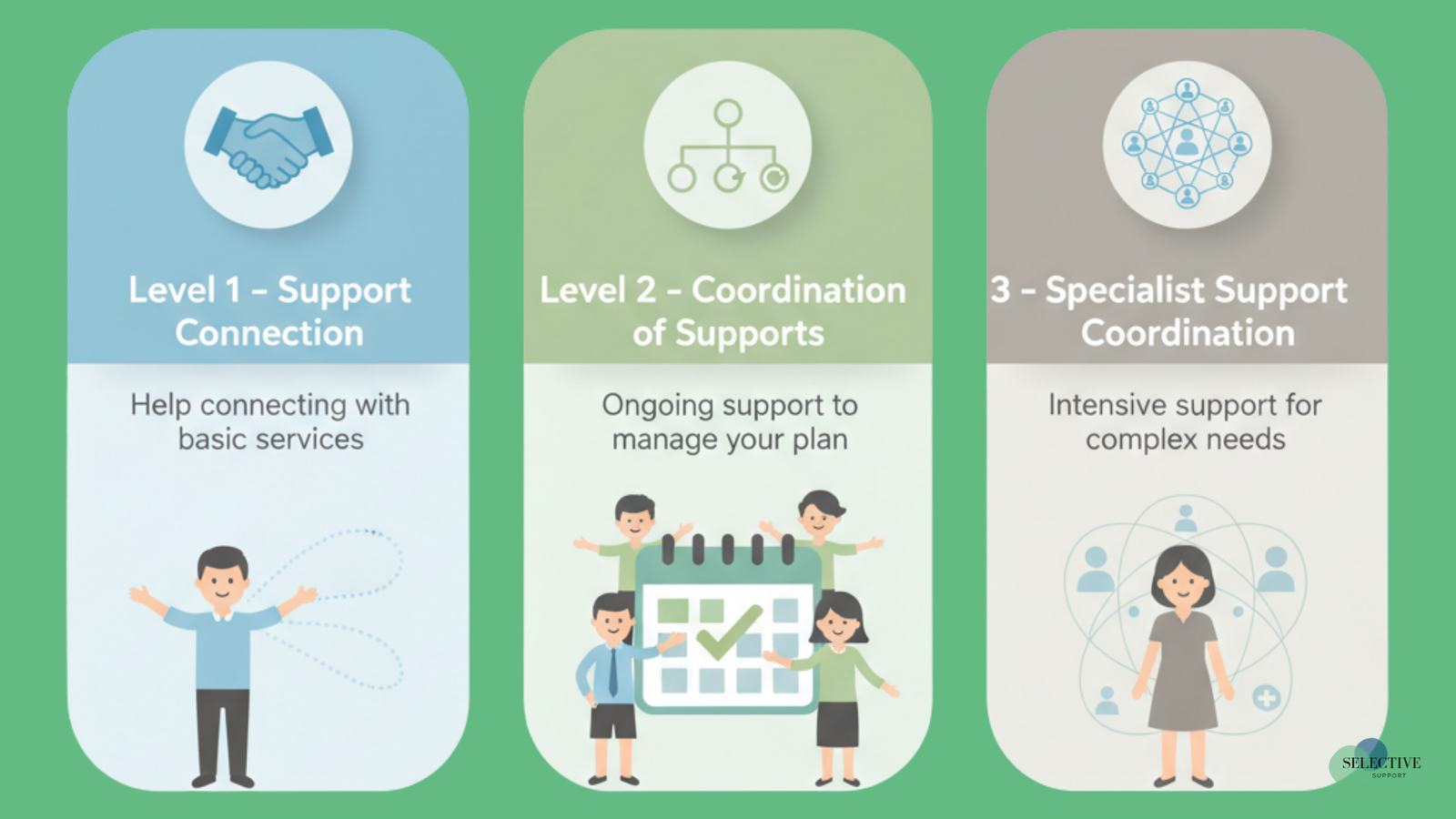
Level 1 Support Coordination – Support Connection
Are you fairly confident using your plan but just need a little help getting started? That’s where Level 1 support coordination, also known as Support Connection, comes in.
This level offers short-term support to:
- Understand the basics of your NDIS plan
- Connect you with the right providers
- Help you start using your funding effectively
It’s ideal if you have fewer supports or more straightforward needs. For example, someone who has just received their first plan might use Support Connection to set up core services and then manage things themselves.
Level 2 Support Coordination – Coordination of Supports
Do you ever feel overwhelmed by all the moving parts in your NDIS plan? If so, Level 2 support coordination might be exactly what you need.
This level is designed for people who need regular support to:
- Understand and implement all aspects of their plan
- Coordinate multiple services like therapy, transport, or group programs
- Manage changes in goals, capacity, or personal circumstances
This is the most common level funded, especially for participants with psychosocial disability.
Let’s take John, one of our clients, as an example. He used to feel anxious just making phone calls to providers. With level 2 support coordination, John now has:
- A regular art group
- Weekly mental health sessions
- Someone to check in, explain changes, and help him feel more in control
Looking for level 2 support coordination that’s personal and consistent? Learn how Selective Support helps people like John stay on track, their way.
Level 3 Support Coordination – Specialist Support Coordination
If your situation is complex, you might be funded for Level 3 support coordination, also known as Specialist Support Coordination.
This level is for participants who:
- Are at risk of breakdown in supports or living situation
- Require a high level of collaboration between services
- Need strong advocacy and crisis planning
Level 3 is usually funded for short periods to stabilise situations and get the right supports in place. A specialist coordinator works closely with health systems, justice services, housing, and other complex areas.
This kind of support can be life-changing for people facing serious challenges. It’s about making sure you don’t have to navigate those systems alone.
How to Know What Level of Support Coordination You Have
Check Your Plan or Ask Your LAC
Not sure which level you’re funded for? The quickest way to check is to:
- Look at your NDIS plan under the section titled Capacity Building Supports
- Check if it lists Support Coordination, Support Connection, or Specialist Support Coordination
- If unsure, ask your Local Area Coordinator (LAC) or current support coordinator to explain it to you
Remember, your level of support coordination should reflect your needs. If life changes, your plan can too.
Choosing the Right Support Coordinator for You
Why Personal Connection and Continuity Matter
You deserve a coordinator who remembers your name, your story, and what matters most to you.
At Selective Support, we believe real support means:
- No handovers from one coordinator to another
- Clear, consistent communication
- Building trust over time
That’s why every client works with a dedicated person who walks alongside them, not just filling out forms, but helping them feel seen, supported, and capable.
Our team is based in Melbourne and understands the local services, community programs, and mental health resources available. Whether you’re dealing with anxiety, supporting a child, or just want someone to explain things in plain English, we’re here.
Get the Right Support for Your NDIS Journey
When you understand the levels of support coordination NDIS offers, you can make clearer, more confident choices about the support you need. Level 1 is great for getting started with simple needs, level 2 offers regular, ongoing help with managing your plan, and level 3 steps in when things are complex or at risk.
You don’t have to guess what level is right for you or go it alone.
Want someone who really listens, explains things clearly, and helps you move forward with confidence? Get in touch with Selective Support today. We’re here to walk with you, one step at a time.
FAQs About Support Coordination in the NDIS
1. Can I change my support coordinator if I’m not happy?
Yes, you can change your support coordinator at any time. Just contact your NDIS planner or LAC, or reach out directly to a new provider like Selective Support for a smoother transition.
2. Is support coordination automatically included in all NDIS plans?
No, support coordination is not automatically included. It’s funded based on your individual needs, complexity of your situation, and what will help you best use your plan.
3. What’s the difference between a support coordinator and a plan manager?
A support coordinator helps you connect with services and use your plan, while a plan manager handles the financial side, paying providers and tracking budgets. Some people have both funded in their plan.