NDIS Speech Therapy: 5 Steps to Get Support That Works for You
Ever felt lost trying to figure out how to access the right NDIS support for you or your child? You’re not alone. Many NDIS participants and carers struggle to understand what services are available, how to get them, or even where to start. One of the most asked-about services is NDIS speech therapy, yet it’s also one of the most misunderstood.
If you or someone you support needs help with communication, speech, or swallowing, this guide will walk you through the five key steps to get the support you need, without the stress. Simple, clear, and designed for everyday people like you.
Step 1 – Understand Speech Therapy Through the NDIS and Who It Is For?
How NDIS speech therapy supports everyday communication
Did you know that around 67% of people admitted after an acute stroke experience speech or communication problems? This highlights how common communication challenges can be, not only among children but also adults recovering from neurological events like stroke.
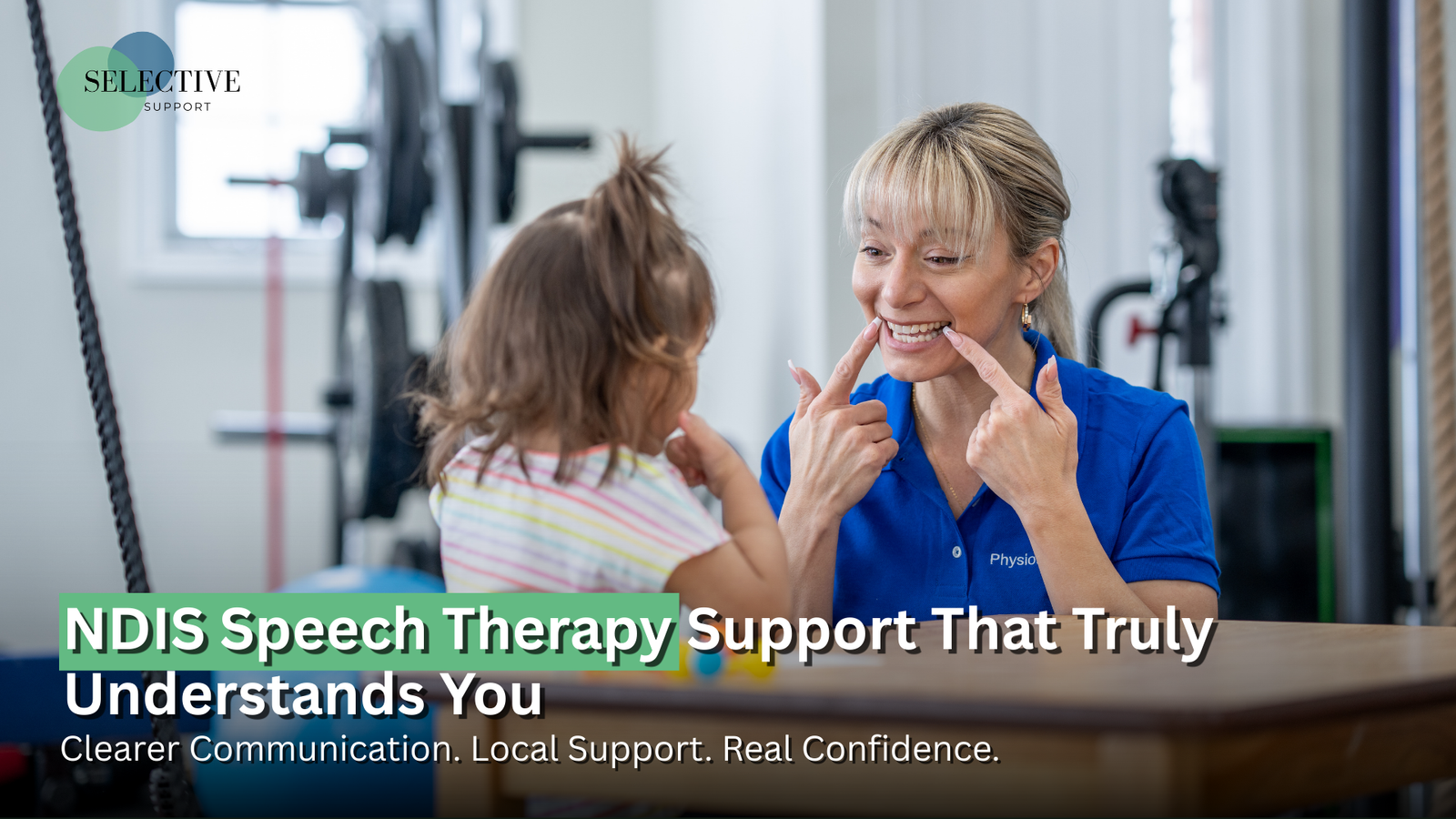
Speech therapy under the NDIS helps people improve how they speak, understand language, communicate with others, and even eat and swallow safely. It’s not just for kids learning their first words. It can support:
- Adults recovering from a stroke
- Children with autism or developmental delays
- Anyone with speech sound issues, stuttering, or language processing challenges
Common reasons people access speech therapy under NDIS
You might be eligible if you or your loved one:
- Has trouble being understood when speaking
- Finds it hard to understand others
- Struggles with social interaction
- Has difficulty with feeding or swallowing
This service is all about helping you feel more confident and independent in your daily life.
Step 2 – Learn About NDIS Funding for Speech Therapy
Where speech therapy fits in your NDIS plan
NDIS funding for speech therapy is usually included under Capacity Building – Improved Daily Living. This covers supports that help you build independence and skills, like communication, emotional regulation, or safe eating.
Speech therapy might also be funded under:
- Early childhood supports (for kids under 7)
- Core Supports, in some cases (especially where safety is a concern)
Not sure if it’s in your plan? Here’s what to do
Don’t worry, you’re not expected to know it all.
- Ask your Support Coordinator to help review your plan
- Look at the “Capacity Building” section for “Improved Daily Living”
- If it’s missing, your Coordinator can help you request a change
At Selective Support, our Support Coordinators help you understand your funding clearly and connect you with the right therapy, without the paperwork overwhelm.
Step 3 – Find the Right NDIS Speech Therapy Near You
Why choosing a nearby therapist matters
When you’re searching for NDIS speech therapy near me, location really does matter. Why?
- Less travel = less stress
- Consistent appointments mean better outcomes
- You or your child feels more at ease in a familiar area
It’s about creating a support routine that fits your life, not complicates it.
What to look for in a local NDIS speech therapist
Look for someone who is:
- NDIS-registered (this means they can bill directly through your plan)
- Friendly, patient, and a good communicator
- Experienced with your specific needs (e.g., autism, stroke recovery, swallowing issues)
- Based close to home or offers mobile/home visits

Step 4 – Access NDIS Speech Therapy in Melbourne and the South-East
Support in your local area, from Dandenong to Cranbourne
If you’re based in Melbourne’s south-east, you’re not short on options. But finding a therapist who “gets you” can still feel overwhelming.
Selective Support is based in Narre Warren, and we regularly help participants in Berwick, Dandenong, Cranbourne, and surrounding areas access speech therapy that fits.
We take the time to understand what you need, match you with providers who align with your goals, and stick with you every step of the way.
Inclusive, culturally responsive therapists make a difference
It matters that your provider:
- Respects your background and culture
- Communicates in your preferred language or style
- Works with you, not just around you
We believe that when support is truly inclusive, outcomes improve, and people feel safer.
“The right support doesn’t just tick boxes, it sees you, hears you, and walks beside you. That’s what care should feel like.”
Step 5 – Get Help Connecting the Dots With a Support Coordinator
A Support Coordinator helps you make the most of your plan
Navigating the NDIS can feel like a full-time job. That’s where a Support Coordinator comes in.
They can:
- Help you understand your plan and what’s possible
- Find therapists that meet your needs and availability
- Make referrals and bookings
- Prepare you for plan reviews
Why Selective Support is different
At Selective Support, we take the time to get to know you. We don’t believe in handovers or treating you like a number.
Your coordinator is your consistent point of contact, someone who listens, explains things clearly, and helps you build confidence in your decisions.
Get the Support You Deserve
If you’ve been trying to understand how NDIS speech therapy works, or you’re not sure where to start, we hope this guide has given you clarity and confidence. NDIS speech therapy helps people of all ages improve communication and daily function. It’s usually funded under Capacity Building in your plan and choosing a local, inclusive provider makes a big difference. Best of all, a Support Coordinator can help you connect the dots and take the pressure off your shoulders.
You deserve support that listens, explains things clearly, and works alongside you. Selective Support is here to help. Reach out today and speak with someone who gets it.
What Else Should You Know About NDIS Speech Therapy?
1. Can I choose my own speech therapist through the NDIS?
Yes, absolutely. If you’re self-managed or plan-managed, you can choose any qualified provider, even if they’re not NDIS-registered. If your plan is NDIA-managed, you’ll need to choose a therapist who is registered with the NDIS.
2. How often should I attend speech therapy sessions?
It depends on your individual needs and goals. Some participants benefit from weekly sessions, while others may attend fortnightly or monthly. Your therapist will work with you to create a plan that fits your pace and priorities.
3. What’s the difference between a speech therapist and a speech pathologist?
There’s no difference, they’re the same profession. In Australia, “speech pathologist” is the official title, but many people use “speech therapist” interchangeably.