NDIS Occupational Therapy: 5 Ways It Helps You Achieve Daily Goals
Have you ever looked at your daily to-do list and felt stuck before even starting? You’re not alone. Many NDIS participants feel overwhelmed by tasks that others might take for granted, like cooking a meal, taking public transport, or simply getting out of bed on time. If you’re nodding along, this post is for you.
NDIS occupational therapy is more than a service. It’s a personalised support that helps you regain control of your day and feel more confident in your own skin. In this blog, we’ll break down what NDIS OT actually is, how it supports your NDIS goals, and the practical ways it can make your everyday life easier.
Understanding NDIS Occupational Therapy and How It Helps You Thrive
So, what exactly is occupational therapy? Simply put, it’s about helping you do the things you need and want to do in everyday life.
Occupational therapy isn’t just theory, research shows OT interventions significantly improve people’s ability to perform everyday tasks and physical function compared with usual care, reinforcing its role in boosting independence and wellbeing.
Two in five Australians (about 7.5 million adults) have had to significantly reduce or stop work, study, caring roles, or community participation due to health issues, injury or disability.
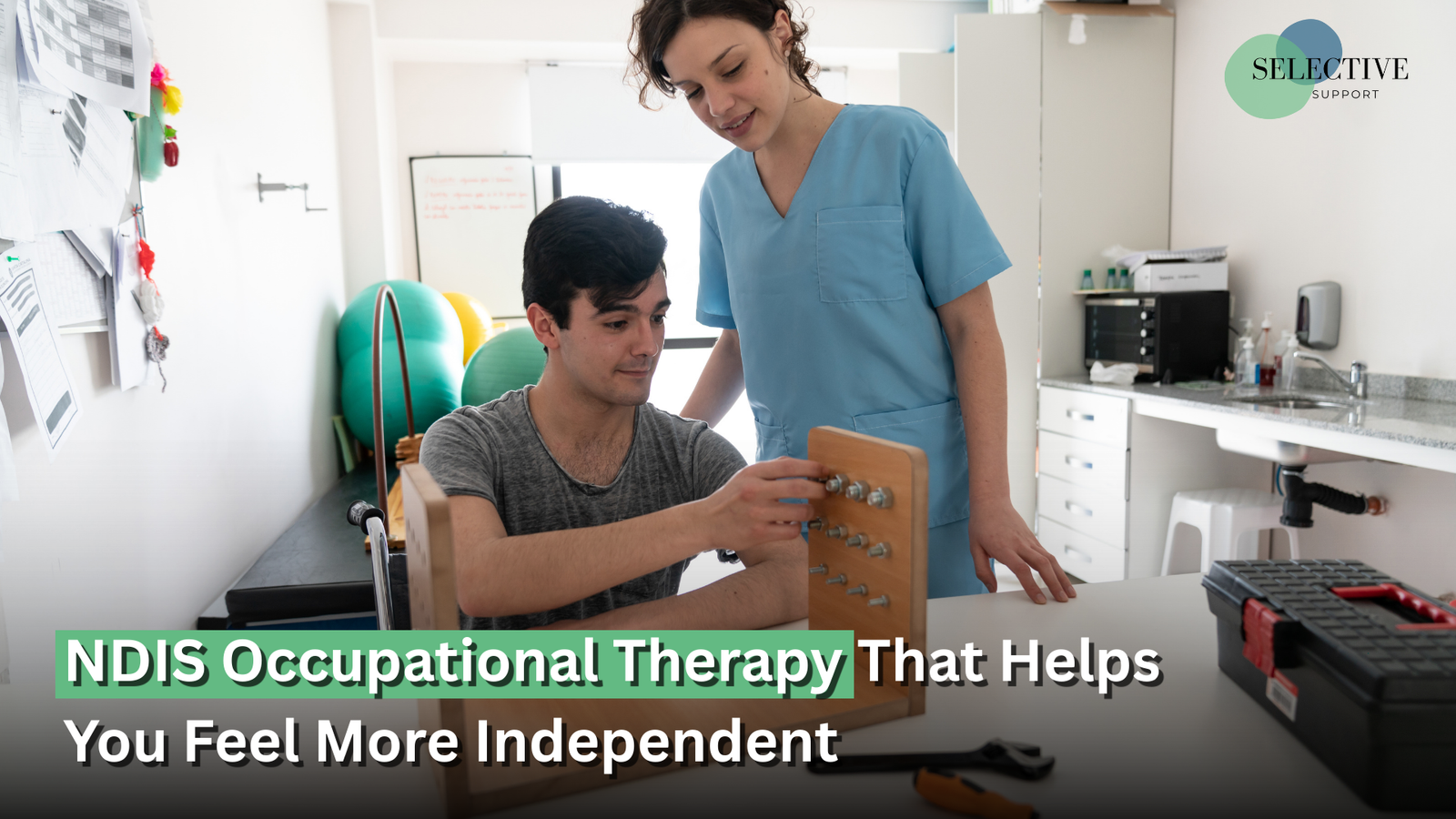
An occupational therapist under NDIS works with you to build independence across daily routines, mental health, physical wellbeing, and social participation. Whether you’re living with a physical, developmental, or psychosocial disability, OT can offer strategies and tools that work specifically for your situation.
With more than 550,000 occupational therapy professionals around the world and over 900 accredited educational programs, this is a well‑established profession dedicated to improving participation and everyday life for people of all ages.
At Selective Support, we work with participants across South-East Melbourne who use occupational therapy to live more independently, build routines that stick, and feel less anxious about daily challenges.
How Occupational Therapy Aligns with Your NDIS Goals
Your NDIS plan includes goals, but what do those actually mean? In simple terms, your NDIS goals are the things you want to achieve with the help of your funding. That might be improving your confidence, learning to cook for yourself, or joining a social group.
Occupational therapy plays a key role in making those goals achievable. For example, if your goal is to get out into the community more, your OT might help you develop the skills to catch a bus, plan your day, or manage the anxiety that comes with social situations.
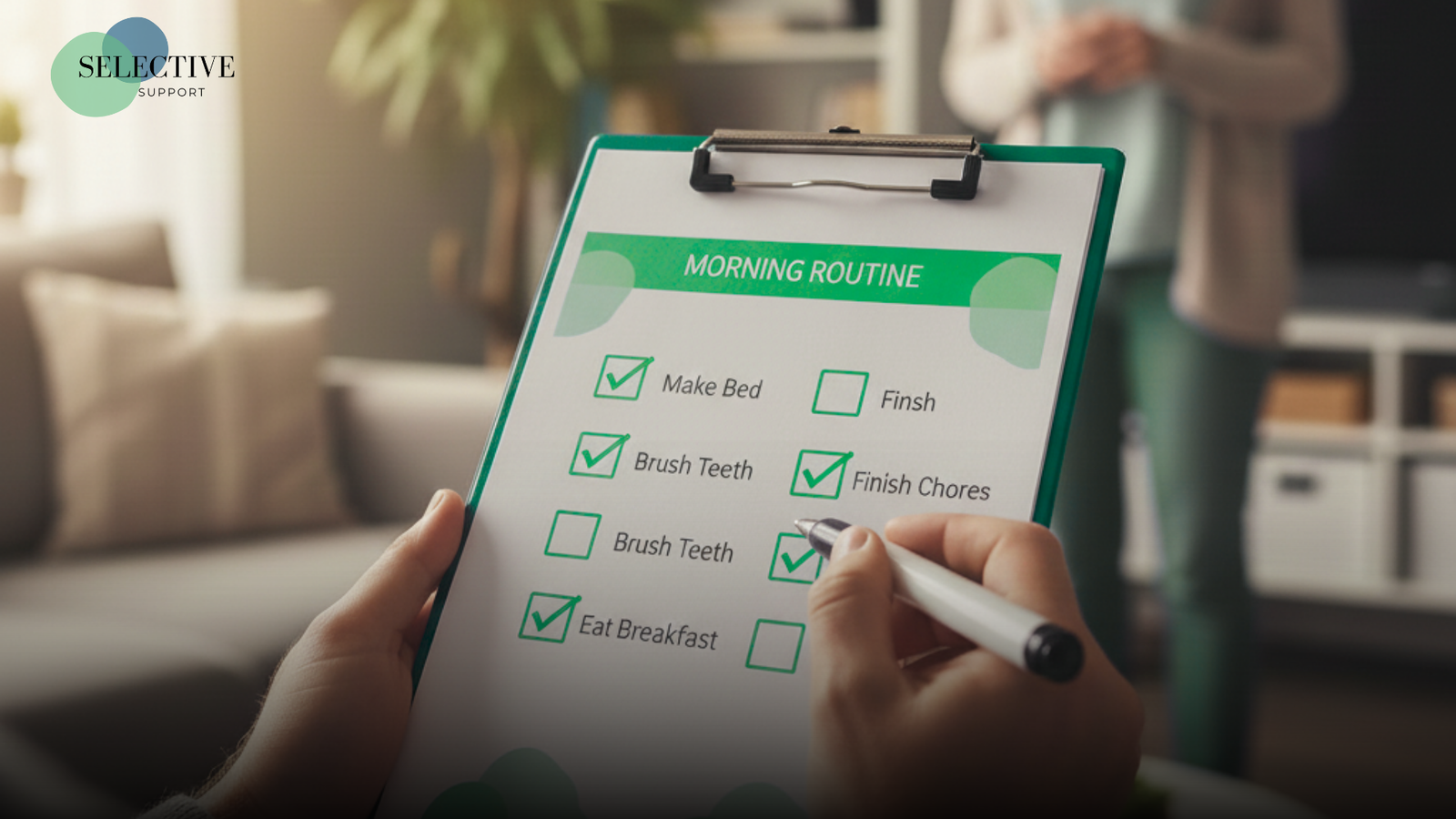
Cyrus, one of our clients, wanted to join a local art group but felt anxious leaving the house. His occupational therapist helped him build a simple morning routine and introduced calming techniques to reduce his stress before each session. Now, he attends weekly and even volunteers at the community centre.
NDIS occupational therapy is always linked to your goals. It’s not about ticking boxes. It’s about supporting you in a way that makes sense for your life.
5 Ways NDIS Occupational Therapy Supports Your Everyday Life
1. Building Routines That Reduce Overwhelm
Do you find it hard to get going in the morning or feel exhausted by small tasks? You’re not lazy or unmotivated, you may just need a different kind of support.
Occupational therapists can help you build a structure to your day that feels doable, not daunting. That might include:
- Creating a visual daily schedule
- Setting reminders on your phone
- Breaking tasks down into small, manageable steps
Over time, this routine becomes second nature, reducing stress and boosting your sense of control.
2. Strengthening Daily Living Skills for Independence
Independence looks different for everyone. For some, it might mean being able to shower and dress without support. For others, it’s cooking a basic meal or managing a small shopping trip.
OTs provide practical, step-by-step help with these daily living skills. They also build your confidence along the way, because it’s not just about doing the task, it’s about believing that you can.
At Selective Support, we see the transformation in clients when they start doing more for themselves. It’s empowering and often life-changing.
“It’s not just about learning how to do something, it’s about finally believing you can. That’s when independence becomes real.”
3. Supporting Mental Health Through Activity and Purpose
If you’re living with a psychosocial disability, it can be hard to stay motivated or feel connected. That’s where occupational therapy becomes more than just routine support, it becomes part of your mental health toolkit.
Doing things that matter to you, whether that’s drawing, gardening, or going for a walk, improves emotional wellbeing. OTs help you reconnect with these activities and build them into your week, so they become a source of joy and structure.
4. Accessing Tools and Support to Make Life Easier
Sometimes, a small tool can make a big difference. An OT can assess your environment and recommend equipment or changes that support your daily life. This could include:
- Shower chairs
- Modified cutlery
- Memory aids
- Mobility devices
These tools aren’t just about comfort, they’re about enabling you to do things on your own, safely and confidently.
5. Getting a Functional Assessment (NDIS) to Support Your Plan
Ever been told you need a functional assessment for the NDIS and felt unsure what that means? You’re not alone.
A functional assessment is usually done by your OT to show how you manage daily tasks. It helps the NDIS understand what support you need and why. It’s not a test. It’s a way to tell your story clearly and get the right help in your plan.
How to Access Occupational Therapy Through Your NDIS Plan
You might be wondering, “Can I get OT through my plan?” The answer is yes, if it’s listed under your funding categories. Occupational therapy can often be funded through:
- Capacity Building: for skill-building and mental health goals
- Core Supports: for daily living assistance (in some cases)
To access OT, here’s a simple process:
- Review your NDIS plan and goals
- Speak with your Support Coordinator
- Choose an OT provider who understands your needs
And if OT isn’t in your current plan, don’t worry. You may be able to request a plan review or explore other options.
Take the Next Step Toward a Life That Feels Like Yours
Living with disability or mental health challenges doesn’t mean giving up on your goals. With the right support, like NDIS occupational therapy, you can build a life that feels more manageable, more fulfilling, and more yours.
OTs don’t just help you do things, they help you believe in yourself again.
If you’re ready to feel more in control and less overwhelmed, Selective Support is here to walk beside you, every step of the way. Get in touch with us today to explore how occupational therapy can support your NDIS journey and daily life goals.
Frequently Asked Questions About NDIS Occupational Therapy
1. Can I choose my own occupational therapist with NDIS funding?
Yes. If you’re self-managed or plan-managed, you can choose any qualified occupational therapist, even if they’re not NDIS-registered. Agency-managed participants need to use registered providers.
2. What’s the difference between physiotherapy and occupational therapy under the NDIS?
Physiotherapy focuses on movement, strength, and physical recovery. Occupational therapy supports your ability to do daily tasks like dressing, cooking, or managing anxiety, helping you live more independently.
3. Do I need a referral to access occupational therapy through my NDIS plan?
No referral is needed. If OT is funded in your plan, your Support Coordinator can help you connect directly with a suitable provider. If it’s not included yet, you may be able to request a plan reassessment.