NDIS disability support: 3 transitions you can manage well
Have you ever had a big life change coming up, like moving house or starting work, and thought, “My supports aren’t going to match my life anymore”? You’re not alone. NDIS disability support can make major transitions feel steadier, but only if it’s planned in a way that actually fits you and what you’re dealing with day to day. This guide walks you through three common transitions and the simple steps that help you feel more prepared, more supported, and more in control, whether you’re an NDIS participant or a carer doing your best to keep everything on track.
Why major transitions can feel harder with the NDIS
When life changes, your support needs often change too. But the systems around you can feel slower, more complicated, and harder to coordinate. That’s when stress builds, routines slip, and you can end up feeling like you’re “failing” when you’re actually just under-supported.
Your support needs change before the paperwork catches up
Even if your plan hasn’t changed, your life has. A new address, a new workplace, or the end of school can affect transport, daily routines, your confidence, and your mental health. For participants living with psychosocial disability, change can feel especially intense because it can disrupt the things that help you stay grounded, like predictability, familiar people, and safe routines.
The “in-between” stage is where stress builds
The toughest part is often the weeks before and after the change. You might be waiting for providers to confirm availability, trying to switch services, or worrying about what happens if you don’t get it sorted in time. Carers can feel this pressure heavily too, especially when you’re already exhausted from forms, phone calls, and trying to advocate without being listened to.
National research found 28.2% of carers reported high psychological distress in 2024, which shows how quickly pressure can build when support is uncertain.
Transition 1: Moving house with the right NDIS housing support
A move can be exciting, but it can also be disruptive in ways people don’t expect. It’s not just packing boxes. It’s new surroundings, new travel routes, new service schedules, and sometimes a spike in stress.
What can change when you move (and why it matters)
When you move, you might lose access to familiar supports or routines that have been holding you together. Things that can shift quickly include:
- how you get to appointments or community activities
- how safe and calm you feel in your environment
- how easy it is to manage meals, sleep, and daily tasks
- whether your current providers can travel to you or still support you
If you’ve ever felt anxious just making a provider phone call, a move can add another layer of overwhelm. That’s why NDIS housing support planning matters, not just the moving date itself.
NDIS housing support checklist: what to plan before moving day
You don’t need a perfect plan, you just need a clear starting point. Here are the most helpful things to map out:
1. Your “first two weeks” routine
What will your mornings look like? When will you rest? Which days are “big days” with appointments?
2. Support schedule and address updates
Let providers know early so shifts, travel, and service agreements can be updated without last-minute stress.
3. Transport and travel practice
A new area often means new routes. Planning a few practice trips (with support if needed) can reduce anxiety.
4. Home set-up needs
Some people need small adjustments for safety or comfort, like organisation strategies, OT input, or assistive equipment.
If this already feels like a lot, that’s a sign you deserve coordination, not more pressure. A Support Coordinator can help you break it down and keep it moving without you carrying every detail.
How an NDIS disability support worker can help during a move
A consistent NDIS disability support worker can make moving feel less chaotic and more manageable, especially if change tends to trigger stress or shutdown. Depending on your goals and needs, a support worker may help with:
- planning and pacing packing (so you don’t burn out)
- attending key appointments or inspections for emotional support
- setting up your new home in a way that supports routine (not clutter)
- learning the local area slowly and safely (shops, parks, transport stops)
- staying regulated on moving day, when everything feels “too much”
The right worker doesn’t rush you. They help you keep your footing while life shifts around you.
Transition 2: Starting work with NDIS employment support that fits your goals
Starting work can be a huge confidence boost, but it can also come with pressure: new people, new expectations, new routines, and worries about coping. The goal isn’t to “push through” at all costs. The goal is to set things up so you can build work into your life in a way that feels sustainable.
Work is more than a job, it’s routine and confidence
For many participants, work is about more than income. It’s structure, purpose, social connection, and self-belief. But if you’ve had long periods of poor mental health, low confidence, or overwhelm in busy environments, starting work can bring up fears like:
- “What if I can’t keep up?”
- “What if I have a bad day and disappoint everyone?”
- “What if I lose my routine and spiral?”
That’s where NDIS employment support can help, by focusing on the skills and supports that make work feel more manageable.
What NDIS employment support can include
NDIS supports won’t “magically get you a job”, but they can help you build capacity around work goals, especially if your disability affects routine, communication, emotional regulation, or confidence.
Depending on your plan and goals, supports may include:
- capacity-building coaching to strengthen routine, time management, communication, and confidence
- psychosocial recovery coaching to manage anxiety, motivation, and stress while you adjust to work life
- support worker assistance with getting ready, transport, and practising new routines (where it aligns with goals and is reasonable/necessary)
- coordination to connect you with the right employment-related services and reduce the admin burden
The biggest benefit is that you’re not trying to change everything at once. You’re building work into your life step by step.
“Start small” plan: 3 steps you can take this month
If work feels big and scary, start smaller than you think you need to.
- Pick one clear goal
Example: “I want to trial 1–2 shifts,” or “I want to volunteer once a week first.” - Trial the routine before the job starts
Practise wake-up time, meals, travel, and rest days so your body and mind adjust gradually. - Plan a review point after 2–4 weeks
This is where you check what’s working and change what isn’t, without judgement.
Transition 3: Finishing school and building your next routine
Finishing school is a major life change for participants and families. It can be a relief in some ways, but it can also feel like a cliff edge: the structure disappears, and suddenly the question becomes, “What now?”
Why the end of school can feel like a sudden drop-off
School provides routine, predictability, and regular contact with people who know the participant. When that stops, it’s common to see:
- increased anxiety or withdrawal
- disrupted sleep and daily structure
- loss of social connection
- more pressure on carers to fill the gaps
This isn’t a sign that someone is “going backwards”. It often just means the next routine hasn’t been built yet.
Supports to consider after school
Post-school support works best when it’s based on the person’s interests, strengths, and pace. Options may include:
- community participation supports (social groups, art programs, hobbies, local activities)
- ongoing allied health support where appropriate
- psychosocial recovery coaching to build confidence, emotional skills, and meaningful goals
- skill-building for independence over time (shopping, cooking, travel training, budgeting)
- regular support worker shifts to help structure the week and reduce isolation
The aim isn’t to fill every hour. It’s to create a week that feels safe, meaningful, and doable.
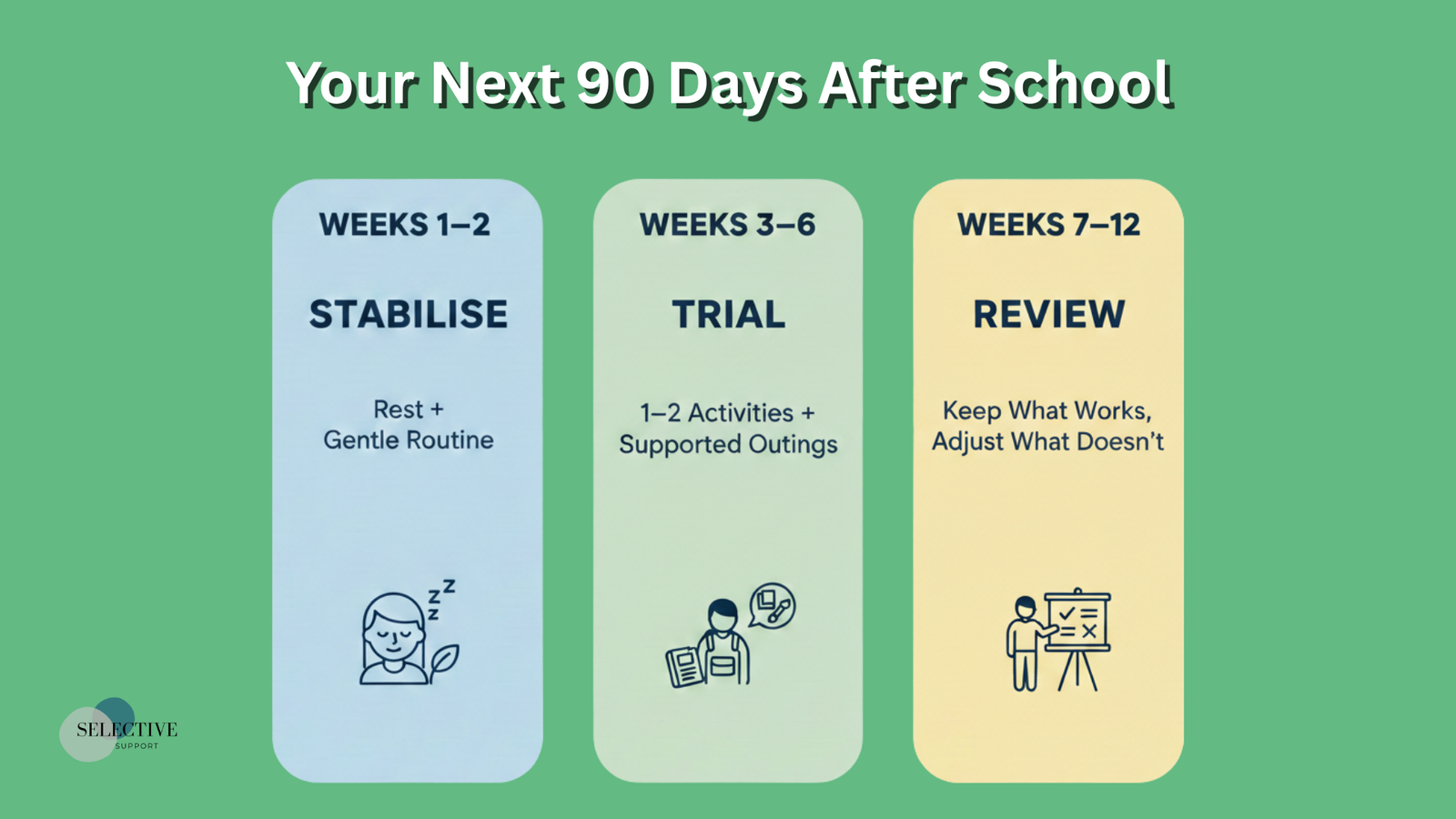
How to plan your “next 90 days” after school
A simple timeframe can stop things from feeling vague and overwhelming:
- Weeks 1–2: Stabilise
Rest, reset, and gently reintroduce routine (sleep, meals, one outing). - Weeks 3–6: Trial
Try 1–2 activities and build in support shifts that help with getting out the door and feeling safe. - Weeks 7–12: Review and adjust
Keep what’s working. Change what isn’t. Add supports slowly rather than all at once.
This approach helps participants build confidence and helps carers feel less like they’re constantly firefighting.
“Finishing school can feel like the ground shifts overnight, not because you’re going backwards, but because the routine that held you steady has suddenly disappeared. With the right support, you can build a new week that feels safe, predictable, and yours again.”
How to make NDIS disability support work better during change
Transitions get easier when you have a simple planning structure. Not a complicated spreadsheet, just a clear way to think.
A simple framework: Goals, Routines, Supports, Back-up plan
When you’re planning any major change, ask:
- Goals: What do you want life to look like in three months?
- Routines: What helps you feel steady each day?
- Supports: Who helps, how often, and with what tasks?
- Back-up plan: What happens if a provider cancels, anxiety spikes, or transport doesn’t go to plan?
This framework keeps the focus where it should be: on your wellbeing, your capacity, and your choices.
When to talk to your Support Coordinator
The best time is before things get urgent. A Support Coordinator can help you:
- map your transition goals
- connect providers and reduce service gaps
- prepare evidence or updates if your needs have changed
- make the process feel more human and less confusing
If you’ve felt let down by big providers or tired of repeating your story, continuity matters. Having someone who remembers your situation can make a huge difference.
You deserve support that fits your real life
Major changes like moving house, starting work, and finishing school can feel heavy, especially when you’re trying to stay on top of your NDIS plan at the same time. The takeaway is simple: plan early, protect your routine, and use the right supports around you. With the right NDIS disability support, you can reduce last-minute stress, keep your wellbeing front and centre, and move through transitions with more confidence.
If you want help making a clear plan for what’s next, Selective Support is here. We offer Support Coordination and Psychosocial Recovery Coaching that’s calm, personalised, and focused on helping you feel informed and in control, plus flexible NDIS disability support services that match your goals. Reach out today for a friendly chat and let’s map your next steps together.
FAQs: NDIS disability support during big life transitions
1) Can you get extra NDIS funding for a major life transition (like moving or starting work)?
Sometimes. If your disability-related needs have changed or your current supports no longer fit your circumstances, you may be able to request a plan reassessment (or provide updated evidence). A Support Coordinator can help you document what’s changed and what supports are reasonable and necessary.
2) What should you do if your supports stop or fall through during a transition?
Act early and treat it like a service gap risk. Contact your providers to confirm availability, ask for short-term alternatives, and speak with your Support Coordinator about backup options. The goal is to prevent a gap turning into a wellbeing crisis.
3) How do you choose the right provider for consistency during transitions?
Look for providers who offer clear communication, regular check-ins, and stable staffing, and who can explain things simply. Ask how they handle staff changes, cancellations, and handovers so you know what support will look like when life gets busy.