NDIS Counselling and 5 Key Differences You Should Know
Have you ever wondered whether the support you’re receiving is actually NDIS counselling or something different altogether? You’re not alone. Many NDIS participants and carers feel unsure about where counselling fits and whether it’s even funded under their plan.
This confusion can make it harder to choose the right support, especially when you’re already trying to manage your day-to-day wellbeing.
In this guide, we’ll walk you through 5 key differences between NDIS counselling and mental health treatment in a simple, clear way. By the end, you’ll feel more confident about what support is right for you and how to move forward without the stress.
What Is NDIS Counselling and How Does It Work?
This confusion is understandable. In Australia, 1 in 5 adults and 1 in 7 young people experienced a mental health disorder in the previous 12 months, which is one reason many people are trying to work out what support belongs under the health system and what may sit within the NDIS.
NDIS counselling is often talked about, but it doesn’t always mean traditional therapy. Under the NDIS, this type of support is usually focused on helping you build confidence, manage daily challenges, and improve your independence.
It’s less about diagnosing or treating a condition and more about supporting how you live your everyday life.
How NDIS Counselling Supports Daily Life and Independence
Instead of focusing on clinical treatment, NDIS counselling-style supports can help you:
- Build a consistent daily routine
- Feel more confident attending appointments or social activities
- Manage stress in everyday situations
- Improve communication and relationships
For example, if leaving the house feels overwhelming, the support may focus on small, practical steps to help you feel more comfortable and in control over time.
Where Disability Support Coordination Fits In
This is where disability support coordination becomes really important.
A Support Coordinator helps you:
- Understand what your NDIS plan includes
- Connect with the right services
- Avoid confusion about what is or isn’t funded
What Is Mental Health Treatment and Who Provides It?
Mental health treatment is part of the health system, not the NDIS. It focuses on assessment, diagnosis, and clinical therapy.
This type of support is usually provided by:
- Psychologists
- Psychiatrists
- General Practitioners (GPs)
The goal is to treat mental health conditions using structured approaches like therapy or medication.
Mental Health Support Melbourne Options Outside the NDIS
If you’re looking for mental health support Melbourne, there are options outside your NDIS plan, such as:
- Medicare-funded psychology sessions
- Public mental health services
- Private therapy providers
These supports can work alongside your NDIS plan, but they are funded through the health system, not your NDIS funding.
Difference 1 You Should Know About Purpose and Outcomes
One of the biggest differences comes down to what each support is trying to achieve.
- NDIS counselling focuses on building your ability to manage daily life
- Mental health treatment focuses on clinical recovery and symptom management
Capacity Building vs Clinical Treatment Explained Simply
Think of it this way:
- If you’re learning how to feel more confident catching public transport, that’s capacity building
- If you’re receiving therapy for anxiety diagnosis and treatment, that’s clinical support
Both are important, but they serve different roles in your journey.
Difference 2 You Should Know About What the NDIS Funds
The NDIS only funds supports that are considered reasonable and necessary for your disability.
This means the support must:
- Be related to your functional needs
- Help you build independence
- Support your goals
When Counselling May Be Included in Your NDIS Plan
NDIS counselling-style supports may be included if they:
- Help you manage daily challenges
- Improve your ability to participate in the community
- Build your confidence and independence
When Mental Health Treatment Is Not NDIS Funded
The NDIS does not usually fund:
- Diagnosis of mental health conditions
- Clinical therapy or treatment
- Medical or psychiatric services
These are typically covered by the health system instead.
Difference 3 You Should Know About Psychosocial Disabilities
If you live with a mental health condition that significantly affects your daily life, it may be considered a psychosocial disability under the NDIS.
This means the focus shifts from the condition itself to how it impacts your ability to function day to day.
How the NDIS Supports People with Psychosocial Disabilities
Supports for psychosocial disabilities often focus on:
- Building structure and routine
- Increasing community participation
- Strengthening confidence and independence
- Supporting recovery in a practical, everyday way
This is where NDIS supports can make a meaningful difference over time.
Difference 4 You Should Know About Types of Support Available
Not all supports look the same, even if they seem similar at first.
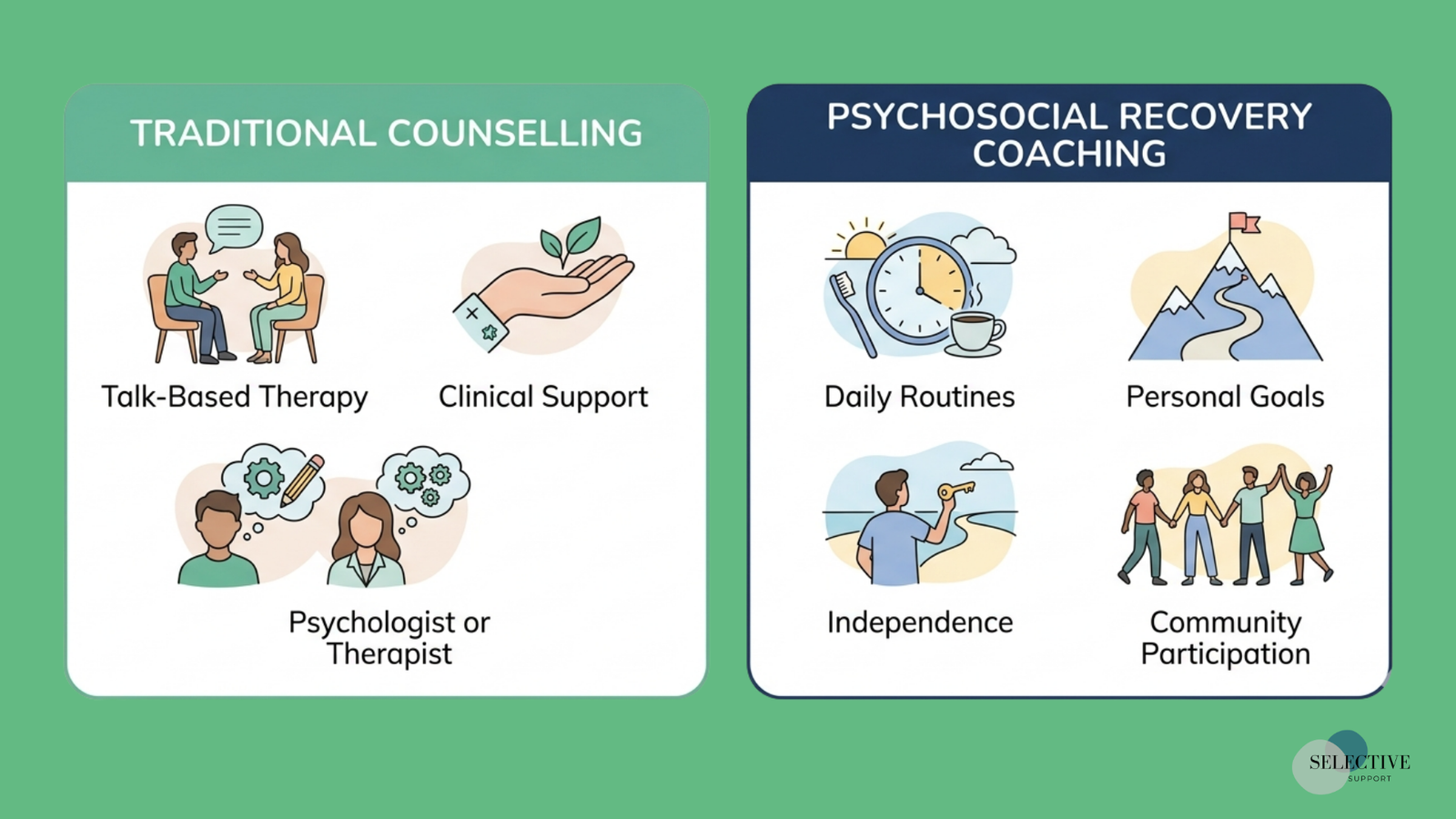
Psychosocial Recovery Coaching vs Traditional Counselling
A psychosocial recovery coach focuses on:
- Helping you set and work towards personal goals
- Supporting long-term recovery
- Building independence at your own pace
This is different from traditional counselling, which often focuses more on talk-based therapy and clinical outcomes.
Combining NDIS Supports with Mental Health Services
Many people benefit from using both types of support together.
For example:
- You might see a psychologist for therapy
- While also working with an NDIS support to build daily routines
This combination can provide both clinical care and practical support.
“Sometimes healing is not just about talking through the hard parts. It is also about having someone beside you while you rebuild confidence in everyday life.”
Difference 5 You Should Know About Getting the Right Support
Choosing the right support can feel overwhelming, especially when everything sounds similar.
The key is to focus on what you need most right now.
Questions You Can Ask About Your NDIS Plan
- Is this support helping me in my daily life?
- Does this align with my NDIS goals?
- Do I also need clinical treatment outside the NDIS?
How Disability Support Coordination Can Guide You
With the right disability support coordination, you don’t have to figure this out alone.
A Support Coordinator can:
- Break things down in a way that makes sense
- Help you explore the right mix of supports
- Check that your plan is working for you
How to Choose the Right Support for Your Situation
There’s no one-size-fits-all answer. Your support should reflect your goals, your needs, and your pace.
When You Might Need Mental Health Treatment
- You need diagnosis or clinical therapy
- You’re managing symptoms that require professional treatment
- Your GP or specialist has recommended it
When NDIS Counselling May Be More Suitable
- You want help with daily routines
- You’re building confidence and independence
- You need practical, ongoing support
When You May Benefit from Both
In many cases, the best approach is a combination of both.
You might:
- Receive therapy through the health system
- Use NDIS supports to apply what you learn in everyday life
This creates a more balanced and supportive experience.
You Don’t Have to Figure This Out Alone
Understanding the difference between NDIS counselling and mental health treatment can feel confusing at first, but it becomes clearer when you focus on one thing: what kind of support helps you live your life with more confidence and control.
NDIS supports are there to help you build independence and manage daily challenges, while mental health treatment focuses on clinical care. Both can play an important role, and it’s okay to need a mix of supports.
If you’re still unsure where to start, that’s completely okay. At Selective Support, we’re here to listen, explain things simply, and walk alongside you so you can feel confident in your NDIS journey.
Reach out today for a free, no-pressure conversation and get the clarity and support you deserve.
Common Questions About NDIS Counselling and Mental Health Support
1. Can I use NDIS funding for online counselling or telehealth support?
Sometimes, but it depends on the purpose of the support and whether it relates to your disability needs and goals. If the support helps build your daily functioning, independence, or capacity, it may be more likely to fit within your NDIS plan. If it is clinical treatment, it is usually funded through the health system instead.
2. Do I need a diagnosis to access NDIS counselling-style supports?
Not always in the way people expect. The NDIS focuses more on how your disability affects your daily life and functioning, rather than just the diagnosis itself. What matters most is whether the support is linked to your goals and helps you manage everyday challenges more independently.
3. Can a Support Coordinator help me find the right counselling or mental health support?
Yes. A Support Coordinator can help you understand your plan, explore suitable providers, and work out whether a support may fit under your NDIS funding or whether it is better accessed through the health system. This can make the process feel much less confusing.